

Prevent Pyometra
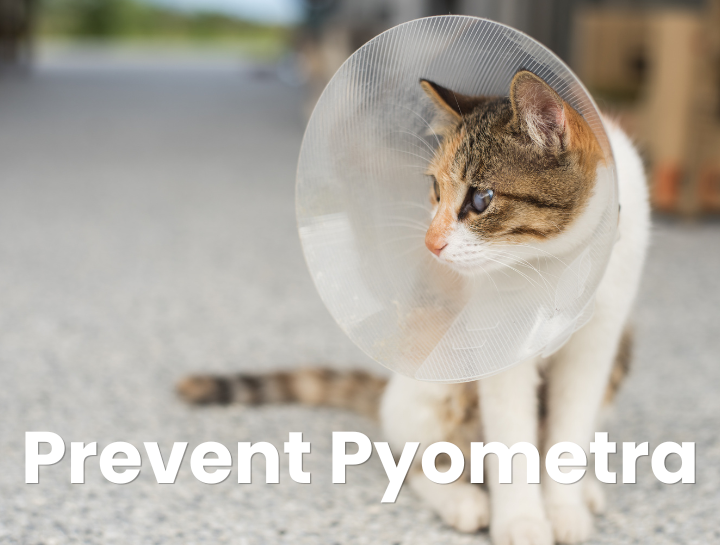
A Serious Infection in Dogs and Cats
Pyometra is a very serious infection inside the uterus. It happens in female dogs and cats that have not been spayed. It can affect 20-25% of unspayed female dogs before 10 years of age. In some rare cases, it can also occur in a spayed animal if not all of the uterine stump is removed during the spay surgery. The uterus fills with mucus and bacteria. Most of the bacteria come from poop or urine. The most common germ is E. coli.
Pyometra usually happens about 4 to 8 weeks after a dog is in heat. In cats, it often happens 1 to 4 weeks after heat. The hormone progesterone helps the infection grow. The uterus makes more fluid, and bacteria can get trapped inside. This can make a pet very sick.
Signs of pyometra can be easy to miss at first. Even though pyometra is a disease that progresses over time, many pets seem to get sick very fast. Some pets have thick discharge from the vulva. The discharge may be white, yellow, green, or brown and can smell bad. Other signs are a swollen belly, not wanting to eat, throwing up, diarrhea, drinking more water, peeing more often, feeling tired, or dehydration.
The best way to stop pyometra is to spay female dogs and cats before they get the disease. Good nutrition, healthy intestinal bacteria, and preventing bladder infections may also help lower the risk. Avoid exposing your pet to extra hormones like estrogen creams.
The best treatment is surgery to remove the infected uterus and ovaries. Most pets recover well after surgery and can go home in about two days. Some pets may be treated with medicine if they need to keep their ability to have babies. It can also be a good way to get the pet more stable for surgery if very sick. Medical treatment can work, but the pet needs to be in the hospital for 1-2 weeks and the infection often comes back within a few months. A veterinarian will decide which treatment is safest for each pet. Fast treatment can save a pet's life.